Why Teak Decking Is Ideal for Dubai’s Outdoor Spaces
Outdoor flooring in Dubai needs to endure intense sunlight, high temperatures, seasonal rain and moisture. Teak is naturally suited to demanding outdoor environments because of its dense structure, rubber, silica and natural oil content. These characteristics contribute to its resistance to moisture and help the timber perform in areas where ordinary wood products may require more protection.
Another reason for the association of teak with marine decking is its chemical composition which allowed timber to withstand prolonged exposure to difficult conditions. Due to its characteristics teak has been a popular material for outdoor architectural applications.
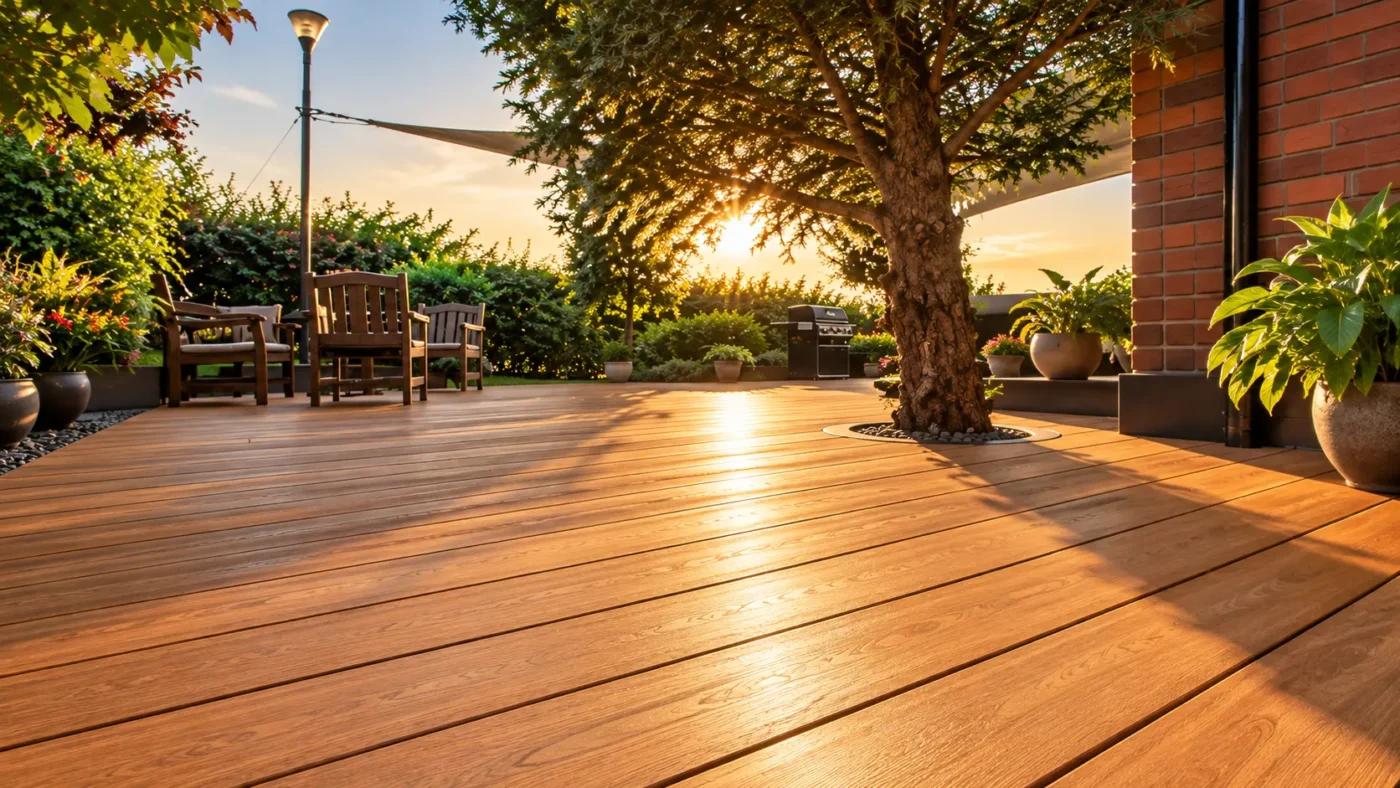
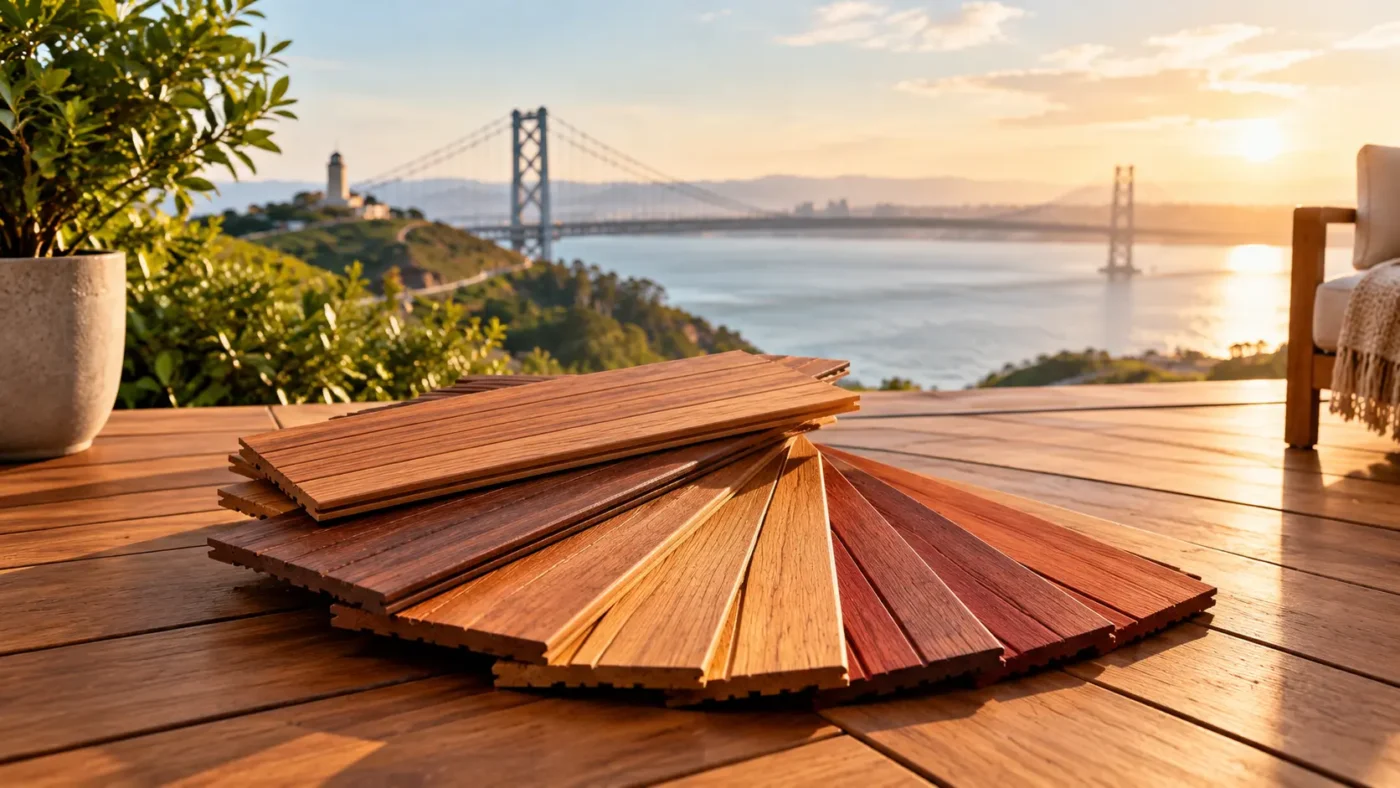
For properties in Dubai , teak decking can provide a natural timber surface without sacrificing the character that makes wood attractive in the first place. Its natural grain gives every installation variation in color and texture, while the dense timber provides a solid surface for regular outdoor use. Key characteristics of teak decking include:
- Natural moisture resistance: Teak contains natural oils that contribute to its resistance to moisture.
- Suitable for outdoor conditions: Teak can be specified for areas exposed to heat, sunlight and changing weather conditions.
- Dense hardwood construction: Its natural density makes teak suitable for outdoor flooring applications with regular foot traffic.
- Distinctive grain: Natural grain variation gives each decking installation an individual appearance.
- Surface flexibility: Decking can be supplied with a ribbed anti-slip surface or a flat surface according to project requirements.
Like other natural timber products, teak is not completely unaffected by weather. Proper installation, suitable finishing and regular care are important for maintaining the appearance and service condition of outdoor decking.
Decking Styles We Offer
Solid Teak supplies decking in formats suited to different outdoor applications. Standard plank decking provides a traditional timber deck using individual boards, while Wood Deck Tiles offer a modular alternative for smaller areas and installations where individual tile placement is more practical. AT Solid Teak, we offer
Standard Plank Decking
Standard teak decking uses individual timber planks that can be fitted according to the dimensions and layout of the outdoor area. The surface can be specified as ribbed for an anti-slip finish or flat where the project calls for a smoother appearance.
The available plank specifications supplied for the product include the dimensions listed in the existing product specifications table. Depending on the project, the decking can be selected according to the required thickness, width and board length.
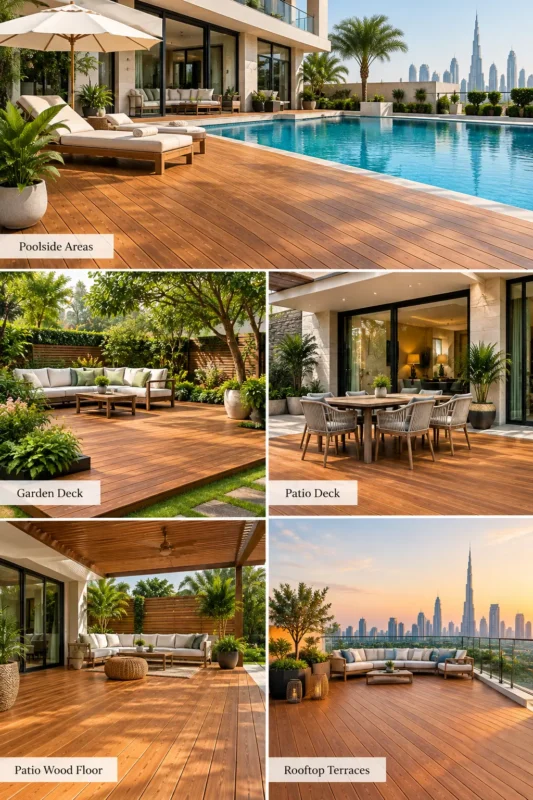
Plank decking is suitable for larger outdoor areas where a continuous timber deck is preferred. It can be used around swimming pools, on terraces, patios, balconies and other outdoor spaces where the design calls for natural solid teak.
The ribbed surface can be considered for areas where additional surface grip is required, particularly around outdoor areas exposed to water. A flat surface may be preferred where the visual character of the timber is the primary design consideration.
Wood Deck Tiles
Wood deck tiles are a modular decking option designed for projects where smaller individual sections are more practical than conventional long planks. Each tile measures 300 x 300 mm and consists of 12 mm timber fixed to a 10 mm poly-frame.
The tiles are available with 4, 6 or 8 slats, giving projects different surface configurations within the same modular format. The tile construction allows individual units to be laid across suitable outdoor surfaces without the same board-by-board fitting process associated with standard plank decking.
This makes Wood Deck Tiles suitable for balconies, compact patios, rooftop spaces and other areas where modular installation is useful. They can also be considered for projects where access, layout or installation time makes smaller decking units more convenient.
The appropriate installation method depends on the existing surface and project conditions. The substrate should be assessed before the tiles are installed.