
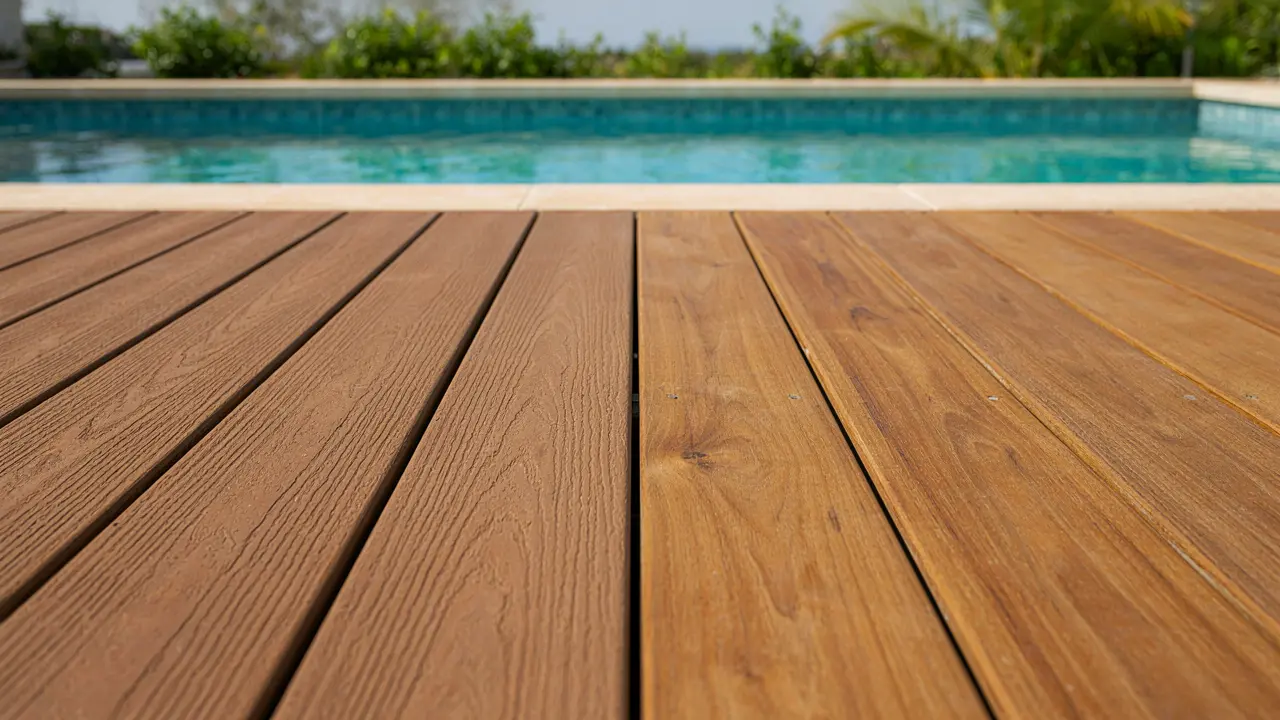
Choosing a decking material for a home in the UAE requires a little more thought than it might in a cooler climate. Extreme summer heat, strong sun, coastal humidity, and fine desert sand all put extra pressure on outdoor flooring. For villa owners, landscapers and pool designers across the Emirates, natural teak and engineered composite decking are two options that come up regularly.
Both materials can look excellent when properly installed. What matters more is how each one performs in Gulf conditions, how much care it requires, and what you plan to do with the space. This comparison covers heat, UV exposure, maintenance, durability, lifespan, and cost to help you understand the differences before choosing between teak and composite decking.
Why Decking Material Matters in the UAE Outdoors
Outdoor flooring in the UAE faces conditions that can be particularly hard on exterior materials. During peak summer, exposed decking can reach surface temperatures well above 50 degrees Celsius. Strong sunlight can also cause poorly suited materials to fade or deteriorate within a few seasons. Coastal humidity, fine sand carried by seasonal winds, and regular use around pools and irrigated gardens add to the challenge.
A surface that looks good in a showroom can behave quite differently after spending an entire summer outdoors in Dubai, Abu Dhabi or Sharjah. The material needs to suit the environment as well as the design. This can help keep maintenance costs predictable and make the space more comfortable to use, around pools where people often walk barefoot.
What is Teak Decking?
Teak is a dense tropical hardwood commonly used for premium outdoor and marine flooring. Its natural oils and silica are a big part of why the timber is used outdoors. They help it resist moisture and insects, while the natural texture of the wood provides good grip underfoot, even when wet. In Dubai, teak decking is often used for villa terraces, poolside walkways, shaded courtyards and outdoor lounges. No two planks look the same, because of the timber’s natural grain. If left untreated, teak gradually develops a soft silver-grey colour. Regular oiling can help retain its original brown appearance.
It is also worth checking where the timber comes from. Reputable suppliers in Dubai work with certified, legally harvested Asian hardwood stock, so buyers should ask for the relevant documentation before choosing a supplier. Solid teak, milled from mature timber rather than laminated or engineered boards, is valued for its long service life and is commonly used in high-traffic residential and hospitality projects across the UAE.
What is Composite Decking?
Composite decking takes a different approach. It combines wood fibres with polymer plastics, which are pressed and extruded into boards designed to resemble natural timber. Most composite boards used for outdoor projects in the UAE fall under the broader category of wood-plastic composite, usually referred to as WPC. Composite boards are designed to resist moisture absorption, insect damage, and surface rot. UV stabilisers added during production help slow fading. There are also plenty of finishes to choose from, ranging from pale sand tones to deep charcoal and walnut effects.
This combination has made composite decking a common choice for outdoor flooring in the UAE. It provides a consistent appearance without requiring the same level of routine care as natural timber.
Heat Performance: Which Stays Cooler Underfoot?
For anyone planning a pool deck or another exposed outdoor area, surface temperature matters. Natural teak generally stays cooler underfoot than composite decking when both materials are exposed to direct summer sun. Its open cellular structure does not withstand heat the same way as a denser polymer-based material. Composite boards can absorb more heat because of their plastic content. Darker finishes are particularly prone to becoming uncomfortable during the hottest part of the afternoon, while lighter colours tend to perform better. The colour of the decking therefore becomes more than a design decision.
Neither material will stay cool during the hottest hours of a UAE summer. Around pools and other outdoor areas used throughout the day, shade structures, pergolas or timed misting systems can also help make the space more comfortable.
Weather and UV Resistance in UAE Conditions
Sun exposure is another area where the two materials behave differently. Composite decking generally has an advantage in long-term UV stability because its polymer content and built-in stabilisers are designed to reduce fading. A quality composite board will typically show less visible fading over several years than untreated teak. Teak gradually develops a grey appearance when it is exposed to sunlight and washing. That does not mean the timber is no longer suitable for outdoor use. Its natural oils also provide considerable resistance to moisture damage and insect activity without chemical treatment. Properly sourced and maintained teak can handle coastal humidity and occasional heavy rainfall, provided the decking structure has adequate drainage.
Then there is the sand. Wind-blown sand is difficult to avoid in the UAE and can gradually wear an outdoor surface. It may dull the finish of composite boards or affect the surface grain of timber. Regular sweeping and gentle cleaning can help limit this wear for either material.
Maintenance and Upkeep Over Time
Maintenance is one of the more noticeable differences between teak and composite decking. Teak needs some regular attention, particularly if the owner wants to preserve its original colour. Cleaning removes dust and salt residue, while oiling or sealing can help maintain the timber. Light sanding may also be needed after several years of use. There is another option with teak. Many homeowners simply allow it to weather naturally. The wood turns silver grey, and the need to maintain its original brown tone is reduced, although the appearance changes.
Composite decking is easier to maintain. Washing with water and mild detergent is enough to remove dust, pollen, and chemicals. It requires no regular oiling, staining, or sanding, and the manufactured surface does not develop the splinters or small cracks that can occur in timber. For someone who likes natural wood and is happy to maintain it, teak offers a look that composite does not fully reproduce. Composite, meanwhile, can make sense for homeowners who would rather spend less time looking after their outdoor flooring.
Lifespan and Durability Outdoors
Well-sourced teak can last for several decades outdoors when it is properly installed and maintained. Even after years of sun exposure and regular foot traffic, the surface does not need replacement. Quality boards are designed to resist rot, insect damage and structural warping. If a composite board becomes badly scratched, faded or damaged, however, replacing the affected section is generally the practical solution. Unlike solid teak, it cannot simply be sanded back and refinished.
Both materials can provide a long service life in the UAE when they are correctly specified and installed with proper ventilation and drainage. The difference is more about what the homeowner expects from the material over time. One can be renewed, while the other is designed to require less intervention.
Cost Comparison
Teak decking generally costs more upfront than composite alternatives. This reflects the timber value and the labour involved in installing it. There can also be ongoing costs if the owner chooses to oil, seal or sand the decking from time to time. Composite decking is usually more moderate in its initial cost and requires little beyond routine cleaning. Some systems also use concealed fastening and quicker installation methods, which can help reduce labour costs.
The initial price is only one part of the comparison. Maintenance products, regular upkeep, labour, and any refinishing or replacing damaged sections can also affect the overall cost.
Which Decking is Right for Your Outdoor Space?
The answer depends largely on the space itself and what the homeowner expects from it. Teak suits shaded terraces, covered courtyards, poolside lounges and other areas where the warmth and character of natural timber are important to the design. It also works for owners who are comfortable keeping up with regular maintenance. Composite decking can be a practical choice for open, sun-exposed areas such as rooftop terraces, unshaded pool surrounds and gardens. Its lower maintenance requirements can also suit rental properties, hospitality projects and busy family homes.
The two materials do not necessarily have to be used separately. Some property owners choose teak for shaded, high-visibility areas and composite decking for sections that receive more direct sun. This way, each material can be used in spaces where it works best.
Teak Decking vs. Composite Decking for UAE Outdoor Spaces
Teak and composite decking each bring different qualities to an outdoor space in the UAE. Teak offers the feel and appearance of natural timber, can remain relatively comfortable underfoot compared with composite, and can be refinished over time. It does, however, require more attention if its original appearance is to be maintained. Composite decking offers UV stability, easier upkeep and a consistent finish. These qualities can be useful for larger outdoor areas that receive a lot of sun and regular use.
The climate is only one part of the decision. How much sun the area receives, how often it is used, whether it is beside a pool, and how much maintenance the homeowner is willing to take on all matter as well. A reliable decking supplier in the UAE can advise on how the available materials are likely to perform. Are you planning a new outdoor space? Speak with our Solid Teak decking specialist to discuss the options and find a material that suits your property and how you plan to use it.
